
Apparel Development and Production Glossary

Whether you are launching, growing, or scaling your brand, clear communication with your clothing manufacturers is the foundation of a strategic sourcing and production strategy.
The AJG Fashion Consulting team has compiled this essential glossary to help founders and production managers navigate the technical complexities of the fashion industry. Understanding these terms is the first step in maintaining supply chain transparency and achieving technical precision across the entire apparel development process.
Technical Design | Concept to Tech Pack
Bill of Materials (BOM): A comprehensive list of all materials needed to make a certain product.
Colorway: A specific color combination or print variation of a single style.
Cut and Sew: A process of cutting the fabric and sewing it together to make a finished garment. It is used to define the production assembly cost.
Grading: The process of taking an approved pattern size and creating your full range of sizes based on the measurements.
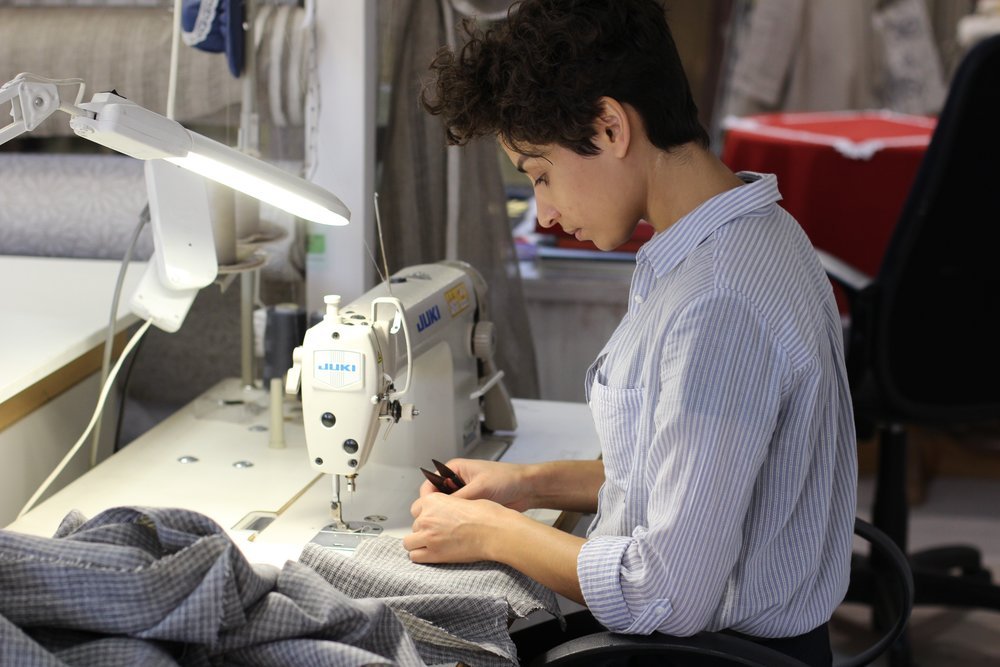
Specs (Specifications): Detailed measurements and construction requirements used by factories to ensure the correct execution of your designs.
Tech Pack: Is a complete compilation of components and construction guidance created by a technical designer for the factory to follow for production.
Tolerance: An allowable variance from the approved final spec measurements.
Strategic Sourcing | Fabric and Trims
Cuttable Width: This is a term that defines the width of the fabric that can be cut and used for production.
Greige: Refers to unfinished and un-dyed fabric from a loom or knitting machine.
Lab Dip: This is a swatch of fabric that has been dyed to match color standards. They are sent to you for approval before the production fabric is dyed.
Ligne: The industry unit of measurement for buttons.
Prepared For Dye (PFD): This is a fabric finishing process. You would purchase PFD fabric if you planned to print or dye it yourself for production.
Strike Off: This is a swatch of fabric that is printed as a test for your approval. Once approved, all fabric would be printed for production.
Sublimation: A method of fabric printing that involves a digital printer that prints designs onto heat transfer paper that can then be applied to garments or fabric.
Production Sampling | Ensuring Technical Precision
Fit Sample: This is a sample made by the factory for you to review and make modifications to measurements, construction and the design of your products.
Pre-Production Sample or PP Sample: The sample created by the factory for final approval before production begins.
TOP Sample: Stands for Top of Production Sample which is a reference of how the production is being created. No modifications can be made to this style, it is purely for reference.
Margin Goals | Sustainable Brand Growth
Assortment: A collection of different types of products offered by a brand or retailer.
Direct to Consumer (DTC): A retail strategy where brands sell directly to the end-user, without using a wholesale or third party channel to maximize margins.
Gross Margin: This is your net sales revenue minus your cost of goods sold.
IMU: Stands for Initial Markup which is the amount of margin you are expected to make by selling at regular price.
Keystone: A traditional pricing model where the retail price is set at double the wholesale cost.
Omni-Channel: Integrates all sales channels to sell to the consumer.
MAP Pricing: This stands for Minimum Advertised Price. This is a pricing strategy you can use with wholesale accounts to regulate how they price your products.
Markup: The percentage added to the cost of a product to cover overhead and profit.
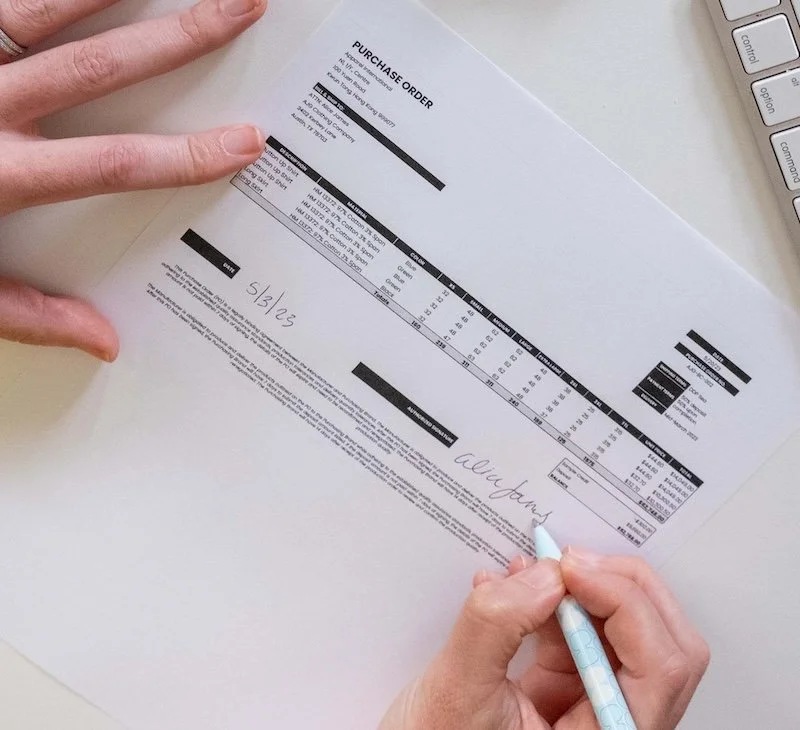
Minimum Order Quantity (MOQ): Used by factories and suppliers as the smallest volume of units they will accept for a single production run.
Retail: An industry term for the price the customer will pay for the product.
Sell-Through: The ratio of the amount of goods sold vs the amount of goods available to sell.
SKU: Stands for Stock Keeping Unit and is a specific number which is given to each variant of the products. This is an imperative unit of measure which enables you to track detailed sales information.
Wholesale: A method of selling your product to a retailer who will then sell your product to the customer.
Manufacturing Reality | Production and Shipping
COO: Stands for Country of Origin.
Duty: This is a tax you pay to import goods into the country. It is a percentage of the total value of the shipment determined by the type of product, material content and country of origin.

FOB: This stands for Free on Board or Freight on Board. This is a international shipping term with defines who is responsible for the shipping cost. It is the location where the ownership of the product changes hands from the seller to the buyer.
LDP: Stands for Landed Duty Paid. This is a method of purchasing goods overseas where the costs of the goods includes shipping, delivery, customs, duty and insurance. Logistically this is the easiest way to produce or source overseas since the goods are delivered directly to you.
VAT: This is Value Added Tax which is a fee that is incurred by some countries for you to sell and ship goods internationally. Either you or the customer will be responsible for paying these fees.
The AJG Fashion Consulting team functions an extension of your brand to turn these technical concepts into manufacturing reality. If you are ready to move beyond the glossary and into a more efficient production cycle, book a call with our team of experts today.